On meditation
But, I can’t meditate
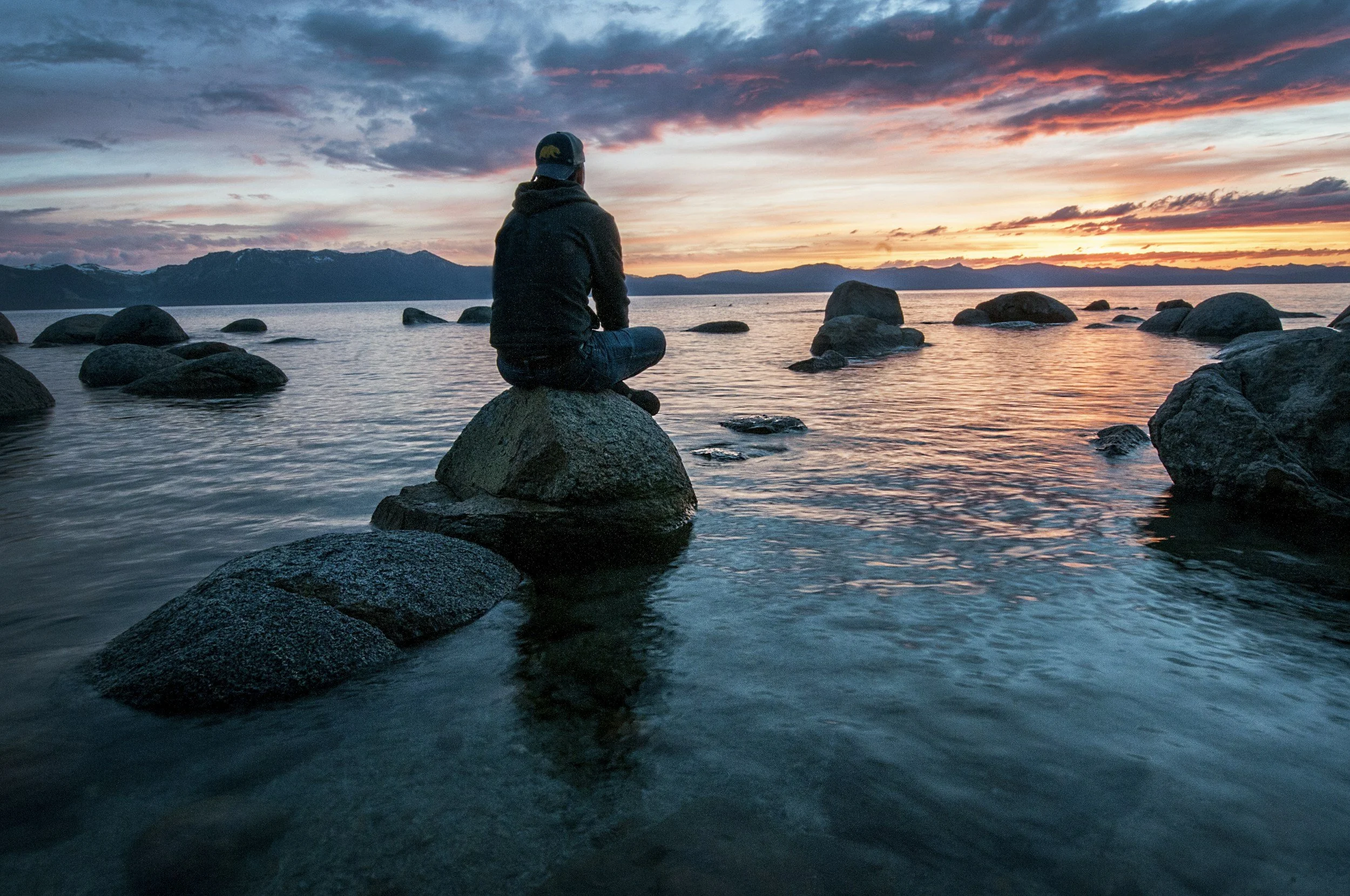
But, I Can’t Meditate
“I’ve tried meditating, but I can’t stop thinking.”
If you’ve ever said those words, you’re in good company. It’s one of the most common reasons people give up on meditation before they’ve really begun.
My first real attempt at meditation
My first true attempt to meditate came after getting sober. There is a step you come to in recovery where the goal is prayer and meditation. I had an idea on how to pray. Zero clue on how to meditate.
I tried. And tried again.
After reading about meditating, I googled “meditation near me.” I was guided to a Buddhist temple near home. I started showing up every Saturday. They would have us sit and count our exhales.
The goal was to count nine exhales, and if we got caught up in thinking before nine, to start again.
One.
Two.
Three… Did I turn off the stove? Did I call my mom back? This is not working! I can’t stop thinking!
I started over. A lot.
The goal is not to stop thinking
It may surprise you to learn that the goal is not to stop thinking. This surprised me.
During one of our guided meditations, the monk said to the group: it is not possible to stop thinking.
Our minds are meant to think. It is your brain’s job.
The experiment the monk gave us
He then suggested we try something. Maybe you will give it a try too.
He said—close your eyes, bring your attention to your breath—now, stop thinking. For me, I was. suddenly overcome with all the things on my mind. He chuckled.
Next, he said—close your eyes, bring your attention to your breath—now, think of everything. My mind went blank.
I was not the only person to experience this crazy phenomenon.
Change your relationship with your thoughts
What I learned in that moment is that the goal of meditation isn’t to have no thoughts. The goal is to change your relationship with them.
The moment in which you notice your mind wandering is not a failed attempt at meditation. It’s the practice.
The idea is not to swim upstream, but to flow with the river. The river in this example is your thoughts.
Meditation can be simply noticing your breath, doing this with intention and mindfulness.
Feel the air enter your nose.
Notice your chest rise.
Sense your belly expand.
Then breathe out.
Slow down.
Thoughts will still come. Memories, plans, the list of chores waiting for you. They’ll all show up.
Instead of fighting with them, you acknowledge them and return to the breath.
The real challenge is believing every thought deserves your attention. Our minds are creating stories and scenarios. Some are useful, some are not.
Meditation teaches us that a thought is just a thought.
Start with one minute
You don’t need twenty minutes two times per day. You do not have to have perfect posture. You do not need a special corner in your room inviting you to sit.
Start with one minute.
Take five slow breaths.
Notice when your mind wanders.
Smile, because it will.
Then come back to your breath.
That’s it.
That simple act of noticing and returning is the foundation of meditation.
And every time you come back to it, you’re practicing exactly what meditation has been about all along.
A practice, not a destination
I have experienced the gentle invitation to slow down during times I might otherwise come out of my body with anxiousness or irritation—the even flow of my nervous system during times that might otherwise be stressful.
It is a practice, not a destination. I would love to practice with you.
Book a discovery call to learn if guided meditation might be for you.
Abundant Blessings,
Kari
Questions people ask about meditation and racing thoughts
Is it normal to think during meditation?
Yes. It is not possible to stop thinking, and it was never the goal. Your mind is meant to think—that is its job. Noticing that you have wandered is not a failed meditation. The noticing is the practice.
How do I stop my mind from wandering?
You don’t. You change your relationship to it. Instead of fighting your thoughts, you acknowledge them and return to your breath. The idea is not to swim upstream, but to flow with the river. The river is your thoughts.
How long should a beginner meditate?
Start with one minute. Take five slow breaths, notice when your mind wanders, smile because it will, then come back to your breath. You do not need twenty minutes twice a day.
Can I meditate while moving?
Yes, and for some people it works far better. Walk slowly and notice each step. Stretch while paying attention to the sensations in your muscles. Garden and feel the soil in your hands. Wash dishes and notice the warmth of the water. Even dancing can become meditation when your attention rests on the experience instead of your to-do list. Movement gives the mind something gentle to partner with. If you feel restless or anxious, moving meditation can be more accessible than sitting still.
Do I need a cushion, an altar, or a quiet room?
No. The belief that you must have a space in your home where you can sit with crossed legs, some spiritual altar, calm music—that is one of the most common reasons people never begin. Not true.
You need your breath and one minute.
What if I have to start over constantly?
Then you are meditating. Starting over is the repetition. Every time you come back, you are practicing exactly what meditation has been about all along.
